
AI Market Cools Off, Is Venice Based on DeepSeek Still an Ideal Pump and Dump Target?


Original Article Title: The AI Dispatch #4 - The Bottomless Pit
Original Article Author: Castle Labs, Web3 Ecosystem Partner
Original Article Translation: Ashley, BlockBeats
Editor's Note: The article reviewed the market fluctuations of AI projects, pointing out that emerging crypto projects often experience a rapid growth followed by a correction, a process that helps filter out projects with long-term value. Despite many AI projects suffering a significant market cap decline, Venice AI has shown long-term potential due to its decentralized, uncensored nature, and innovative tokenomics. However, Venice's launch process has also sparked controversy, especially regarding team operations and transparency.
The following is the original content (slightly reorganized for better readability):
AI Market Review
The road has been long and bumpy. The market volatility of the past few months has made everyone forget that conventional markets do not only go up. After experiencing a massive surge, the AI sector is now undergoing a severe correction. This is normal for the emerging narratives in crypto: they first experience unprecedented growth by attracting industry attention.
This leads to frenzy — but ultimately to a correction. Once this correction happens, we can distinguish which projects are truly worth investing in. The correction is actually the Darwinian evolution process that crypto projects go through.

In fact, 90% of AI projects may eventually go to zero. Once this happens, we will know if this narrative is sustainable (spoiler: we believe it is), and this usually occurs when everyone has either left the market or exposed too little. The pain might continue, but we are far from over.
The total market cap of AI agents has been completely decimated. From $15 billion just a few weeks ago, it has now experienced over a 60% pullback, with the market cap dropping to less than $7 billion.
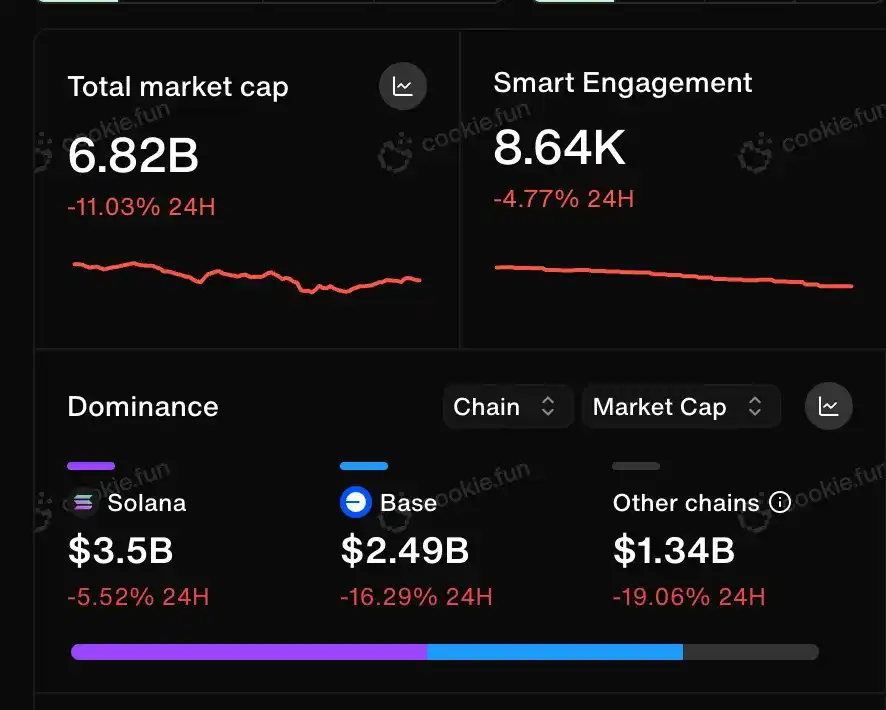
This is reflected in the prices of top launchpads and agents:
· AI16Z: From over $2 to $0.35
· ZEREBRO Devastation: Dropped to 0.05
· FARTCOIN: Once Again Falls Below 0.70
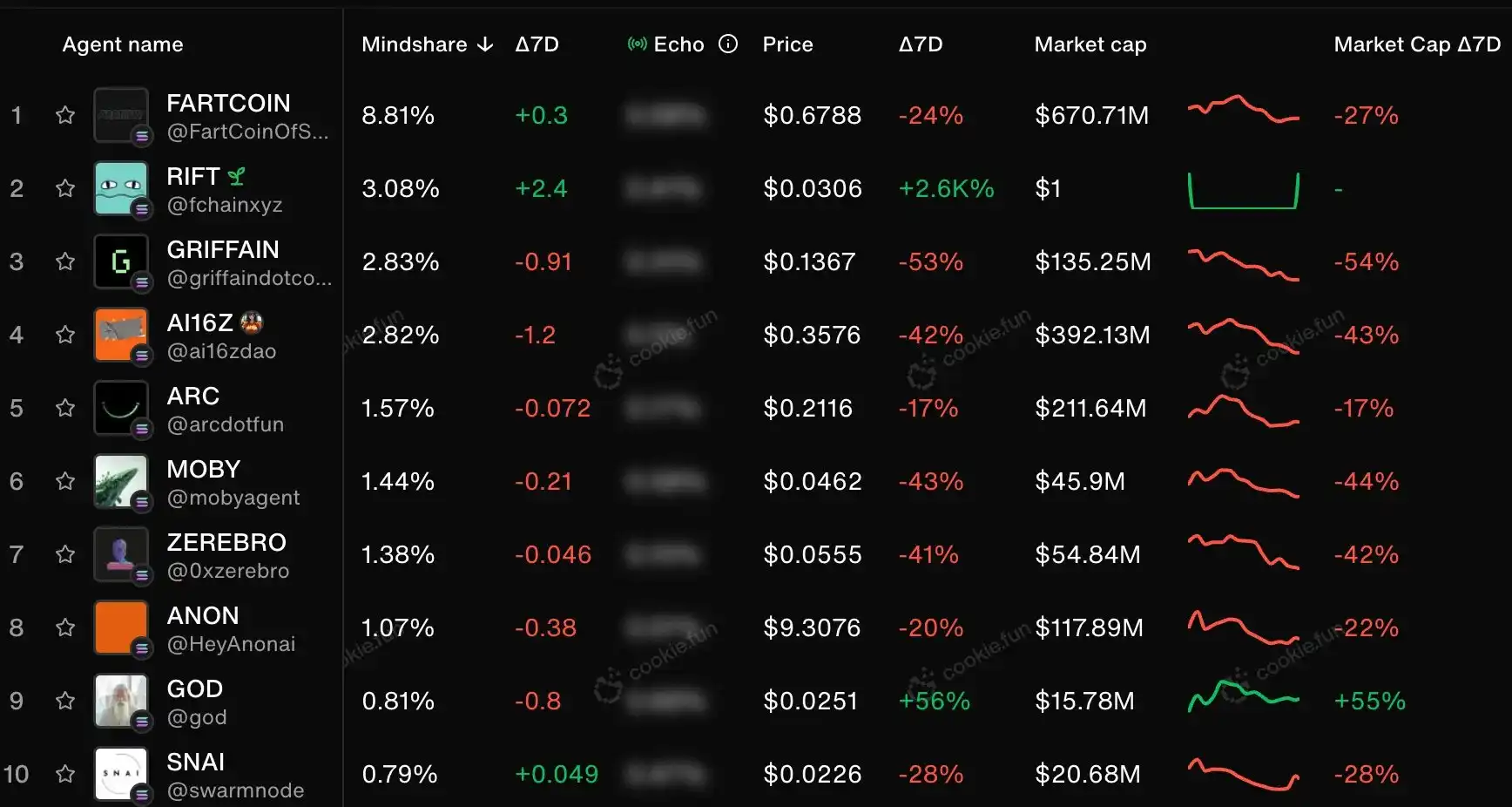
The only agent whose market value has increased in the past week is $GOD. Well, that's not surprising either; after all, he is omnipotent.
In this chaotic situation, Solana seems to be gaining a competitive advantage against Base:
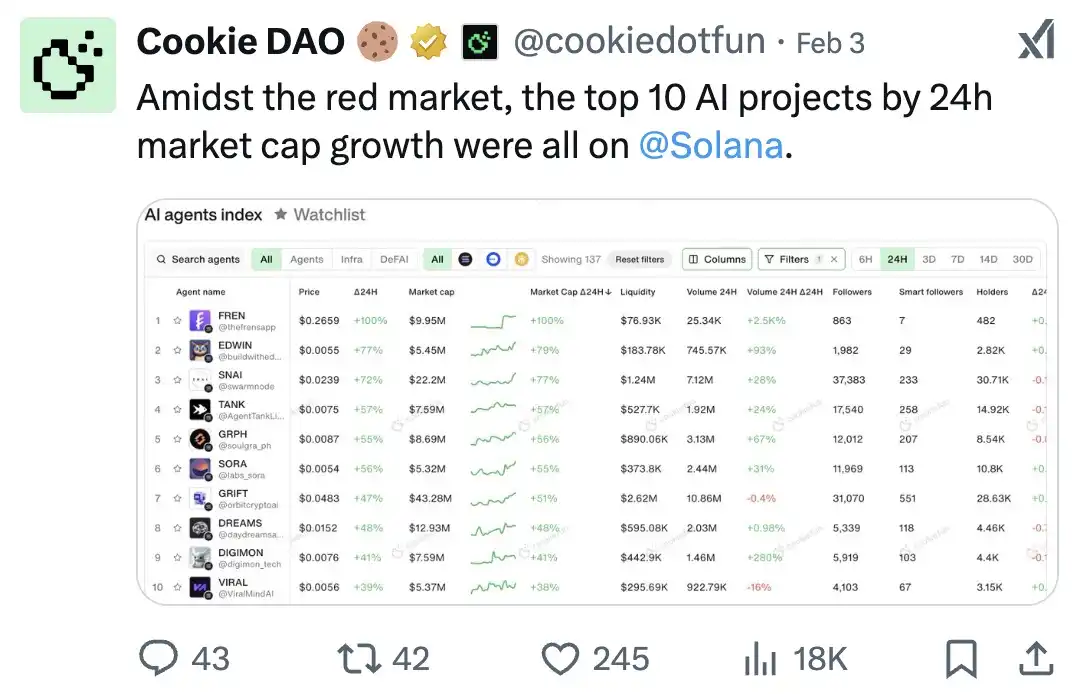
However, when there is blood in the water, it is usually the best time to buy. Although the price is falling, innovation in the AI field is at a historical high.
Venice AI & VVV: AI Inference Based on DeepSeek

Venice AI, launched in May 2024, is a private and uncensored generative AI platform designed to serve as an alternative to mainstream AI services like ChatGPT. In a world where AI interactions are increasingly monitored, Venice ensures user privacy by preventing data surveillance, censorship, and payment friction. The platform has experienced rapid growth, with over 450,000 registered users, over 50,000 daily active users, and 15,000 inference requests per hour.
Venice AI Team
Venice is led by Erik Voorhees, a legendary figure in the crypto industry who played a key role in Bitcoin adoption in 2013 and later expanded to a cryptocurrency exchange and gaming platform. His expertise in decentralized finance and user sovereignty makes him a strong advocate for permissionless AI.
The project's COO, Teana Baker-Taylor, brings deep experience from major crypto companies like Crypto.com, Binance, Circle, and HSBC, adding credibility and execution power to Venice's mission.
Venice Product Overview
Venice AI allows users to perform three main activities leveraging different open-source AI models:
· Text Dialogue: LLama, Dolphin, Qwen, or Deepseek
· Image Generation: Fluently, FLUX, Pony Realism, and Stable Diffusion
· Code Development: Deepseek, LLama, and Qwen
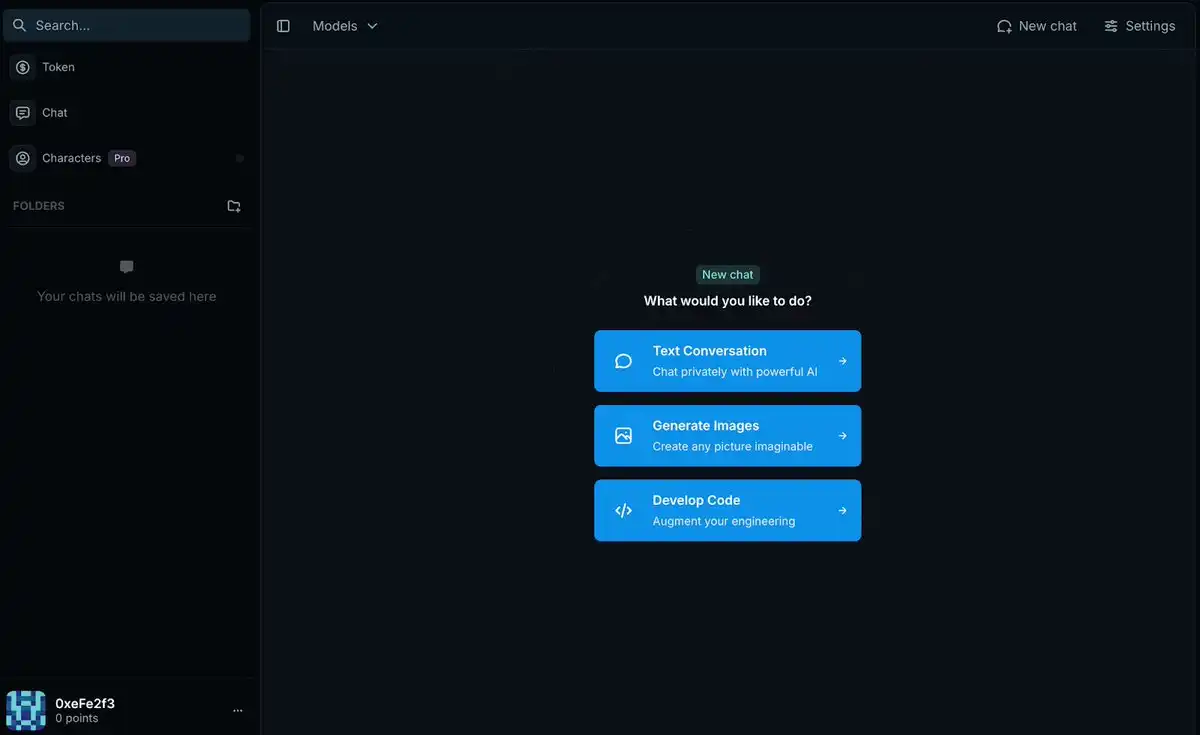
Recently, the global spotlight has been on the Deepseek AI model, proving that open-source solutions can compete with the most famous closed-source solutions like ChatGPT, and even more competitively. Providing a user experience with Venice as smooth as that offered by large tech companies' closed-source solutions.
How to Unlock AI Inference at Zero Cost with VVV
VVV is the native token of Venice, designed to eliminate the cost barrier associated with AI inference. Users do not need to pay per request; instead, they can:
· Stake VVV to gain a proportional share of Venice's computing power.
· Earn staking rewards while using AI, creating a negative marginal cost structure.
· Monetize unused computing resources by reselling computing power.
This model transforms AI inference into an ownership-based resource rather than a pay-per-use service.
Tokenomics and Dynamic Supply
· Total VVV Supply of 100 Million – 50% airdropped to early users and AI/crypto community projects.
· 14% Annual Inflation Rate – New tokens allocated to stakers to reward network usage.
· No Presale or VC Allocation – Venice provides liquidity directly on Aerodrome, ensuring transparency.
· Growth in Resource Value – With the increase in AI computing power, the inference capacity per staked VVV increases, making it a deflationary AI asset in terms of utility.
Bullish Case: Venice Aligns with the Crypto+AI Trend
· AI Inference as a Scarce Commodity – Inference is the "fuel" of AI, and as demand for AI agents skyrockets, access to computing power will become a high-value asset.
· Permissionless and Uncensored AI – Unlike centralized models that restrict content and monitor users, Venice operates in a censorship-resistant manner, aligning with the sovereignty ideals of crypto.
· Native Cryptocurrency Staking – Stakers earn rewards while using AI, transforming typical expenses into income-generating assets.
· Scalability and Network Effect – Venice's API adoption will drive VVV demand, aligning its value with the expansion of the AI industry.
Venice AI and VVV represent a revolutionary shift in the way AI compute access and monetization are approached.
Venice-Related Controversies
The launch process of the Venice AI project has not been without controversy, especially surrounding the actions of team members and market participants. Wintermute and Kbit received a significant amount of $VVV tokens before the project went live, accounting for 5.5% of the total supply. Wintermute sold $1.4 million worth of tokens before the Coinbase listing, while Kbit deposited $8.8 million to Coinbase.
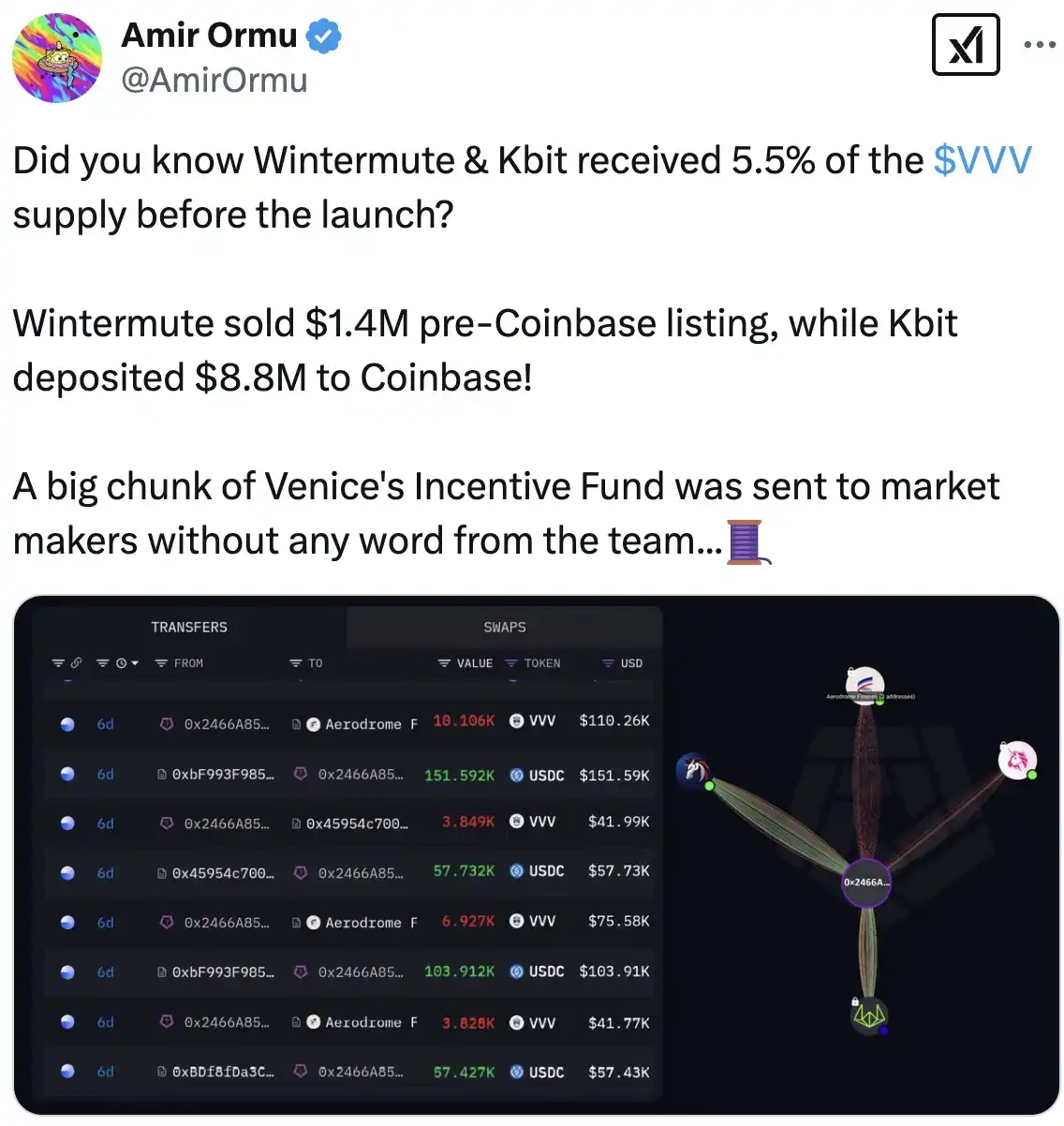
Furthermore, a large portion of the funds in Venice's incentive fund was transferred to a liquidity provider without any explanation from the team, raising questions about the project's transparency.
Source: Original Tweet
You may also like

SpaceX vs Tesla vs xAI: Which Elon Musk Trade Has the Biggest Upside in 2026?

OpenAI Reveals It Has Confidentially Submitted an S-1 to the SEC, Keeping the Door Open for a Future IPO
On June 9, according to an OpenAI announcement, the company recently confidentially submitted a draft S-1 registration statement to the U.S. Securities and Exchange Commission (SEC), beginning the preliminary compliance process for a potential initial public offering. OpenAI said it chose to disclose this proactively because it expected the news might leak; however, the company has not yet set a specific listing timeline, and related arrangements may still take some time.

Latest research from 13 top universities including Cornell University: The current state, challenges, and misconceptions of the fusion of Crypto and AI
Deconstructing Anthropic: The Best AI Company, Possibly Also a Type of Organizational Invention
Apollo and Blackstone Reportedly Back $35 Billion Anthropic Chip Financing as Deal Details Remain Unclear
On June 9, according to currently available news alerts, Apollo and Blackstone Group participated in a $35 billion financing for an Anthropic “chip project.” Based on the original wording of the report, the funding has already been raised, but public information remains limited. The financing structure, use of proceeds, project entity, and whether Apollo and Blackstone participated through equity, debt, or project financing have not yet been disclosed.

Humanity Protocol Security Incident Escalates: More Than $31 Million Stolen From Related Addresses as Attacker Continues Selling H for ETH
On June 9, according to monitoring by Onchain Lens, more than $31 million has been stolen from addresses linked to Humanity Protocol, and the attack is still ongoing, with the hacker continuously swapping H tokens for ETH. Project founder Terence Kwok later confirmed the security incident on X, saying the issue involved a private key leak.

Bloomberg: As Bitcoin Weakens, Stablecoins and RWA Continue to Drive Expansion in Crypto Businesses
In June, Bloomberg reported that despite Bitcoin falling below $60,000 last week, wiping out about $235 billion in market value within seven days, and dropping close to 50% from last year’s peak, some core businesses in the crypto industry are still expanding, mainly in stablecoins, real-world asset tokenization (RWA), payments, and infrastructure. The report also noted that overall altcoin activity has contracted significantly: altcoin market capitalization has fallen from a peak of about $431 billion in November 2021 to around $170 billion, and among the tens of millions of tokens issued in recent years, fewer than 1,700 still maintain meaningful trading activity.

Galaxy Deep Research Report: How Hyperliquid's HIP-4 Upgrade Changes the Landscape of Prediction Markets?
Binance Research: RWA Market Expected to Expand Nearly 6x from Early 2025, with Public Equities and Onchain Payments Heating Up Together
In June, Binance Research said in its monthly market report that the real-world asset (RWA) market is expected to grow by about 589% from the beginning of 2025. Bond- and money market fund-related RWA expanded by about $6.5 billion, up 83% year over year, while publicly traded equity RWAs grew by about 422%. The report also noted that monthly crypto debit card transaction volume exceeded $747 million in May, up 48.6% year to date.

Japan to Assess a Framework for Yen Stablecoins and Crypto ETFs as Asia’s Compliant Payments Narrative Heats Up
Recently, according to the original report, Japan is considering the launch of yen stablecoins and cryptocurrency ETFs. Public information remains limited at this stage, and there is still no complete policy text, regulatory draft, or clear implementation timeline, so this is better characterized as a “policy discussion” rather than formal implementation. The original wording also noted that advancing stablecoin regulation in Asia is driving XRP usage and supporting growth in the XRPL ecosystem. However, based on currently available public information, there is not enough evidence to directly establish a clear causal relationship between this round of discussion in Japan and XRP or XRPL.

ZachXBT: Humanity private key leak and abnormal surge in H token should be viewed separately
On June 9, according to related disclosures, on-chain investigator ZachXBT posted an update on Humanity’s roughly $31 million security incident, saying that after further analyzing fund flows, he currently tends to believe the project team was not involved in an “inside job” or a self-staged attack. According to him, the official explanation about the private key leak was broadly accurate, but before the token unlock, the price of H had been artificially pushed higher, and the hacker later took advantage of that market environment; therefore, the private key leak and the earlier abnormal price pumping should be regarded as two separate and independent events. This reframing has shifted the market’s understanding of the nature of the incident. Earlier discussion around Humanity had focused on whether the team directly participated in the attack or used the security incident to cover up internal operations. ZachXBT’s latest remarks shift the focus from “whether it was self-theft” to “whether there were pre-unlock market structure issues.” He also questioned whether the team may have.

Morning Report | OpenAI has submitted an S-1 registration statement draft to the U.S. SEC; Morpho completes $175 million financing

Morning Report | BitMine increased its holdings by 126,971 ETH last week; trader Eugene announced his exit from the crypto market

Wang Chuan: How can one not feel anxious after the neighbor Old Wang made thirty times profit by investing in storage stocks? (Seven) - A quarter-century cycle
Cryptocurrency CEXs are flocking to sell US stocks, and traditional brokerages are facing an "uninvited guest."
$75 billion in foreign capital has fled, and South Korean retail investors have absorbed it all using leverage

Japan’s Three Megabanks Plan Joint Stablecoin Issuance in Fiscal 2026
MUFG, SMBC, and Mizuho reportedly plan to jointly issue fiat-pegged stablecoins in fiscal 2026, signaling Japan’s growing push into bank-led digital payment infrastructure.

Humanity Discloses H Token Dual-Chain Attack Details, With Losses on Ethereum and BSC Exceeding $36 Million
Humanity said the H token attack across Ethereum and BSC caused more than $36 million in losses after leaked ProxyAdmin keys enabled malicious contract upgrades and token minting.
SpaceX vs Tesla vs xAI: Which Elon Musk Trade Has the Biggest Upside in 2026?
OpenAI Reveals It Has Confidentially Submitted an S-1 to the SEC, Keeping the Door Open for a Future IPO
On June 9, according to an OpenAI announcement, the company recently confidentially submitted a draft S-1 registration statement to the U.S. Securities and Exchange Commission (SEC), beginning the preliminary compliance process for a potential initial public offering. OpenAI said it chose to disclose this proactively because it expected the news might leak; however, the company has not yet set a specific listing timeline, and related arrangements may still take some time.
Latest research from 13 top universities including Cornell University: The current state, challenges, and misconceptions of the fusion of Crypto and AI
Deconstructing Anthropic: The Best AI Company, Possibly Also a Type of Organizational Invention
Apollo and Blackstone Reportedly Back $35 Billion Anthropic Chip Financing as Deal Details Remain Unclear
On June 9, according to currently available news alerts, Apollo and Blackstone Group participated in a $35 billion financing for an Anthropic “chip project.” Based on the original wording of the report, the funding has already been raised, but public information remains limited. The financing structure, use of proceeds, project entity, and whether Apollo and Blackstone participated through equity, debt, or project financing have not yet been disclosed.
Humanity Protocol Security Incident Escalates: More Than $31 Million Stolen From Related Addresses as Attacker Continues Selling H for ETH
On June 9, according to monitoring by Onchain Lens, more than $31 million has been stolen from addresses linked to Humanity Protocol, and the attack is still ongoing, with the hacker continuously swapping H tokens for ETH. Project founder Terence Kwok later confirmed the security incident on X, saying the issue involved a private key leak.


