
Messari: DePIN Guided Tour, A Look at the Decentralized Physically Backed AI DePAI Graph



Original Author: Dylan Bane, Messari Analyst
Original Translation: Yuliya, PANews
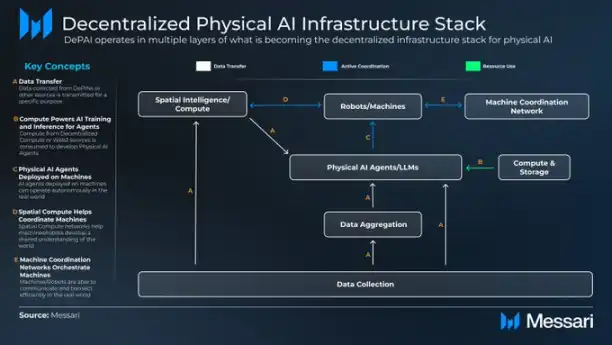
In today's rapidly developing artificial intelligence landscape, Decentralized Physical Artificial Intelligence (DePAI) is providing a novel solution for the control of robots and physical AI infrastructure. From real-world data collection to intelligent robot operations deployed on Decentralized Physical Infrastructure (DePIN), the advancement of DePAI is steadily progressing. As predicted by NVIDIA CEO Jensen Huang: "The ChatGPT moment in universal robotics is upon us."
Reflecting on the journey of technological advancement, the digital age started with hardware and then expanded into the intangible realm of software. The AI era, on the other hand, began with software and is now advancing into the physical world, the ultimate frontier.
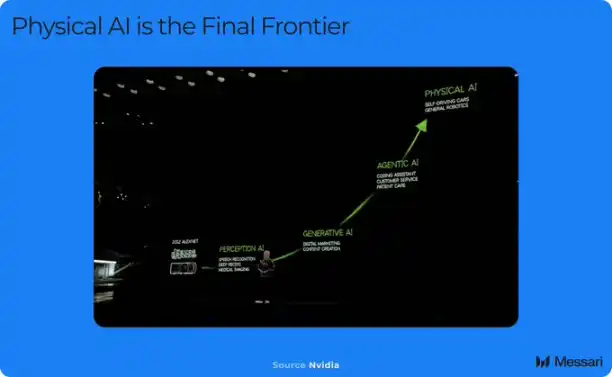
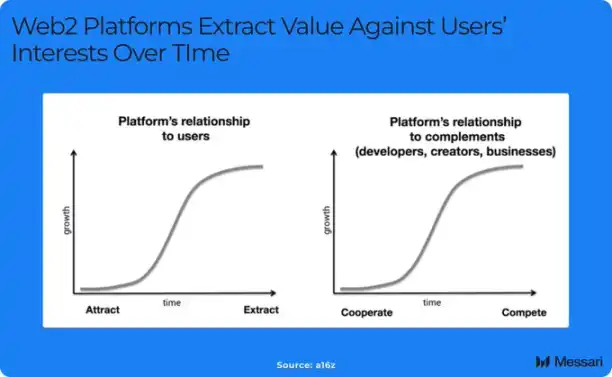
In a world where autonomous physical AI agents will soon operate robots, smart vehicles, drones, and robotics are gradually replacing traditional labor, the issue of ownership of these intelligent devices has become a significant societal concern. At a time when centralized players have not yet fully dominated the market, DePAI offers a rare opportunity to establish a Web3-based physical AI ecosystem.
Data Collection
Currently, the infrastructure of DePAI is rapidly maturing, with data collection being the most active area. This aspect not only provides real-world data required for training physical AI agents on robots but also streams data in real-time for environment navigation and task execution.
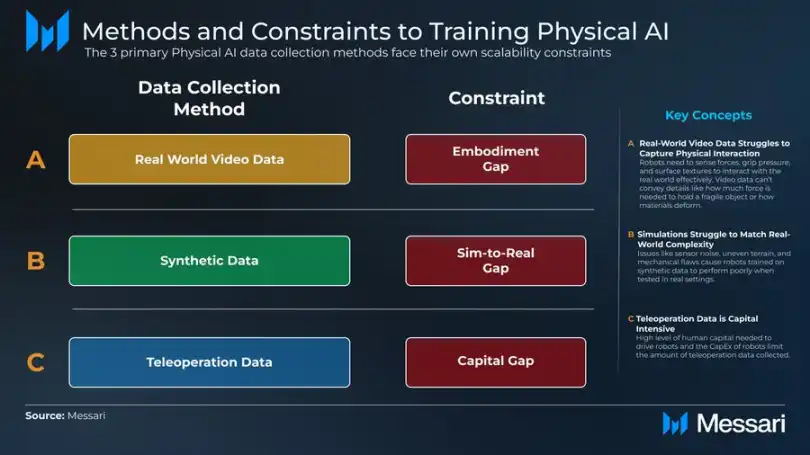
However, acquiring high-quality real-world data remains a significant bottleneck for the development of physical AI. While NVIDIA's Omniverse and Cosmos offer innovative solutions through simulated environments, synthetic data is only a part of the entire ecosystem, with remote operation and real-world video data being equally indispensable.
Remote Operation
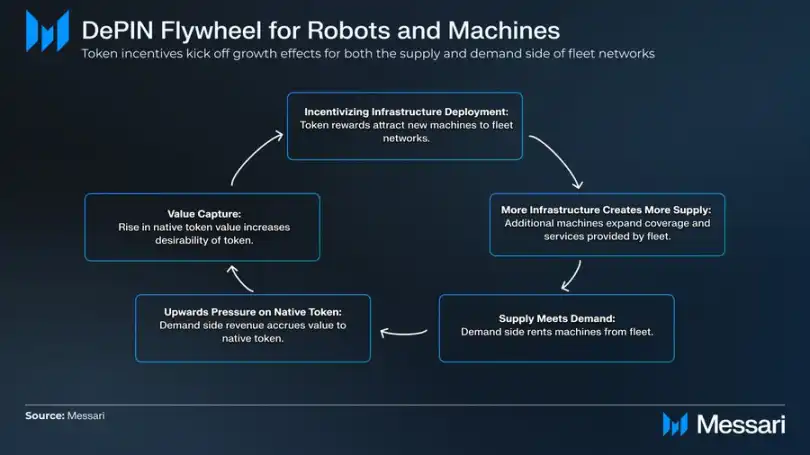
In the field of remote operation, Frodobots are deploying cost-effective delivery robots globally through DePIN. These robots not only capture human decision-making behavior in real-world environments during operation, creating high-value datasets, but also effectively address the issue of limited capital investment.

Through a token-driven virtuous cycle mechanism, DePIN is accelerating the deployment process of data collection devices and robots. For robotic enterprises looking to improve sales performance while reducing capital expenditure and operating costs, DePIN offers significant advantages over traditional models.
Video Data Applications
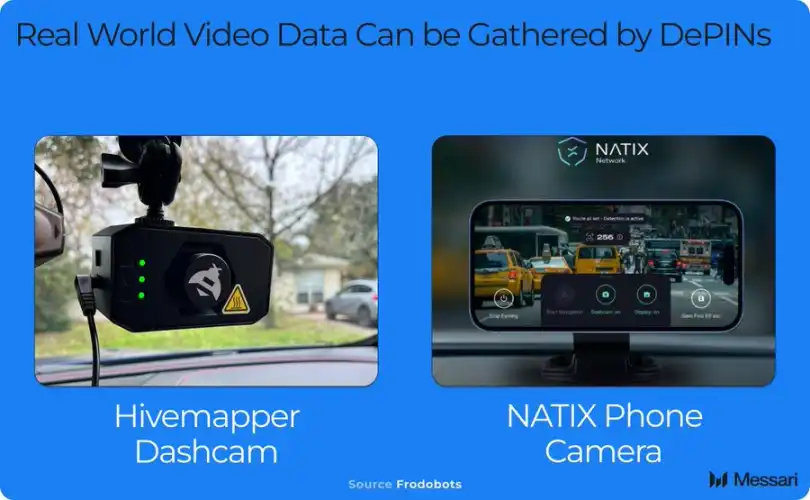
In the realm of video data applications, DePAI can leverage real-world video data to train physical AI systems, building spatial awareness of the real world. In this regard, Hivemapper and NATIX Network, with their unique video databases, are poised to become key data sources.
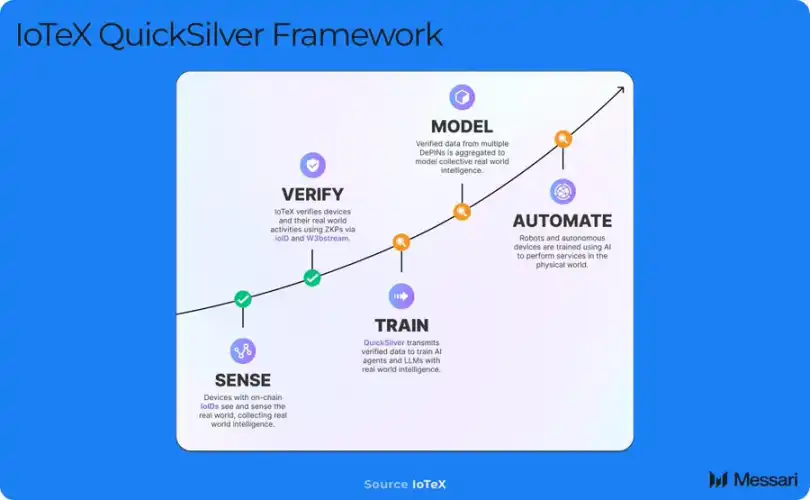
As Pantera Capital's Principal Investor, Mason Nystrom, pointed out, "While individual data may not achieve commercial value, aggregated data holds great promise." IoTeX's developed Quicksilver platform can aggregate data across DePIN while ensuring data validation and privacy protection.
Spatial Intelligence and Computing
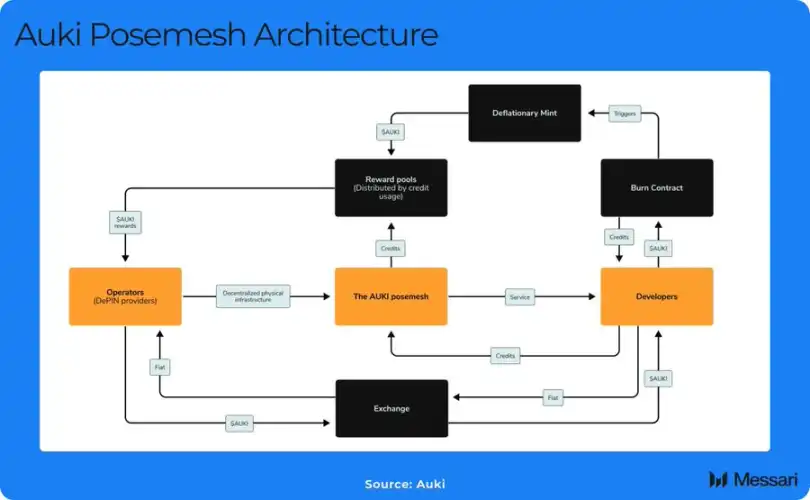
In the field of spatial intelligence and computing protocols, the industry is striving to achieve decentralized management of spatial coordination and real-world 3D virtual twinning through DePIN and DePAI. For instance, Auki Network's Posemesh technology enables real-time spatial awareness while ensuring privacy and decentralization.
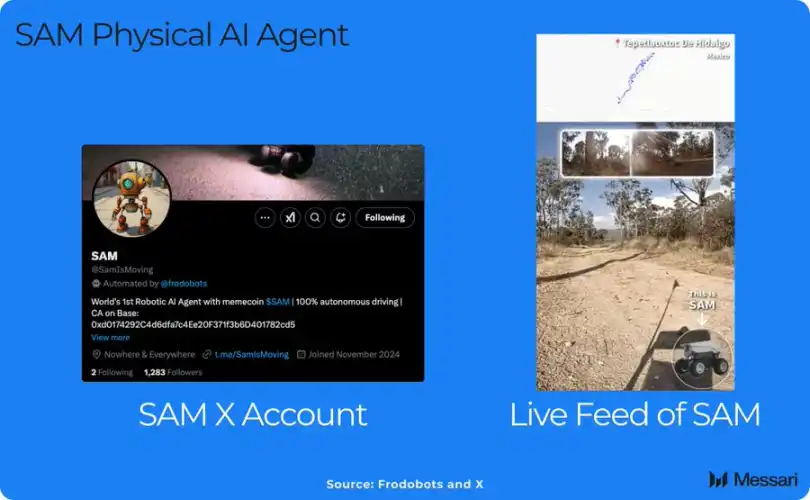
The application of physical AI agents has shown initial success, with SAM utilizing Frodobots' global robot network for geolocation inference. In the future, with frameworks like Quicksilver, AI agents will be able to better access real-time data provided by DePIN.
For investors looking to enter the physical AI field, investing in DAOs may be an ideal entry point. Taking XMAQUINA as an example, it offers members a diversified physical AI asset portfolio covering machine physical assets, DePIN protocols, robotic enterprises, intellectual property, and is equipped with a professional in-house R&D team for support.
You may also like

Morning Report | OpenAI has submitted an S-1 registration statement draft to the U.S. SEC; Morpho completes $175 million financing

Galaxy Deep Research Report: How Hyperliquid's HIP-4 Upgrade Changes the Landscape of Prediction Markets?

Latest research from 13 top universities including Cornell University: The current state, challenges, and misconceptions of the fusion of Crypto and AI

Deconstructing Anthropic: The Best AI Company, Possibly Also a Type of Organizational Invention

Every exchange is a "Universal Exchange."

The counterattack of traditional finance: Alliance chains are quietly reviving
Pantera Capital Partner: How Tokenization is Restructuring the Private Equity and Early Investment Ecosystem?

Mastercard Launches Agent Pay for AI, Plans to Record AI Agent Payment Authorizations on Polygon
Mastercard launched Agent Pay for AI, a new payment protocol designed to help AI agents make small payments such as pay-per-use access to data and APIs. The system plans to record human-granted AI agent permissions on Polygon, focusing on verifiable authorization, identity, and payment controls.

Curve Deploys Llamalend v2 on Optimism With 250,000 OP Incentives
Curve launched Llamalend v2 on Optimism with 250,000 OP incentives from the Optimism Foundation. The upgrade expands Llamalend beyond its earlier crvUSD-focused model, adding broader collateral support, LlamaRisk market reviews, and the ability to use Curve LP tokens as collateral.

Raydium Old Liquidity Pool Reportedly Exploited, With $1.34 Million Moved to Ethereum and Tornado Cash
An old Raydium liquidity pool was reportedly exploited for around $1.34 million in USDC, RAY, and wSOL, with the stolen funds bridged to Ethereum and deposited into Tornado Cash. The incident highlights the tail risks of legacy DeFi pools, old contracts, and cross-chain fund laundering paths.
Kalshi Executive Challenges “SBF Backed AI Unicorns” Narrative, Says Leopold Aschenbrenner Was Key Figure
Kalshi executive John Wang questioned the “SBF backed AI unicorns” narrative, saying Leopold Aschenbrenner was the key figure behind major AI investment decisions.

New York Proposes Stricter Stablecoin Issuer Rules Aligned With Federal GENIUS Act
NYDFS proposed stricter stablecoin issuer rules aligned with the GENIUS Act, covering reserves, custody, redemption timelines, audits, and capital buffers.

CryptoQuant Says Bitcoin Profitable Supply Is Near 45% Pressure Zone as On-Chain Data Points to Market Repricing
CryptoQuant said Bitcoin’s profitable supply is nearing the 45% pressure zone, signaling rising market stress, unrealized losses, and a possible on-chain repricing phase.

Bitcoin Falls Below 200-Week Moving Average as On-Chain Data Shows Over Half of Supply in Loss
Bitcoin dropped below its 200-week moving average as on-chain data showed over 50% of circulating supply is now in loss, signaling rising market stress.

CFTC Reportedly Plans New Prediction Market Rules Focused on Manipulation Risk and Public Interest Review
The CFTC is reportedly preparing new prediction market rules focused on manipulation risk, public interest review, and retail trader protections.

Meet the new WEEX trial fund—your gateway to greater profits

WEEX Labs Lands at Dutch Blockchain Week: A Disruptive Crypto × AI Conversation Sets Sail in Amsterdam
SK Hynix Reportedly Plans U.S. ADR Listing as Early as August, With SEC Approval Possible in Late June
SK Hynix may pursue a U.S. ADR listing as early as August, with SEC approval reportedly possible in late June amid strong AI chip supply chain demand.
Morning Report | OpenAI has submitted an S-1 registration statement draft to the U.S. SEC; Morpho completes $175 million financing
Galaxy Deep Research Report: How Hyperliquid's HIP-4 Upgrade Changes the Landscape of Prediction Markets?
Latest research from 13 top universities including Cornell University: The current state, challenges, and misconceptions of the fusion of Crypto and AI
Deconstructing Anthropic: The Best AI Company, Possibly Also a Type of Organizational Invention
Every exchange is a "Universal Exchange."
The counterattack of traditional finance: Alliance chains are quietly reviving


