
WSJ: Making Billions Overnight, He Bets Big on Bitcoin to Turn It Around


Original Title: The Man Making Billions From the Wildest Bitcoin Bet
Original Author: Gregory Zuckerman, WSJ
Translation: Luffy, Foresight News
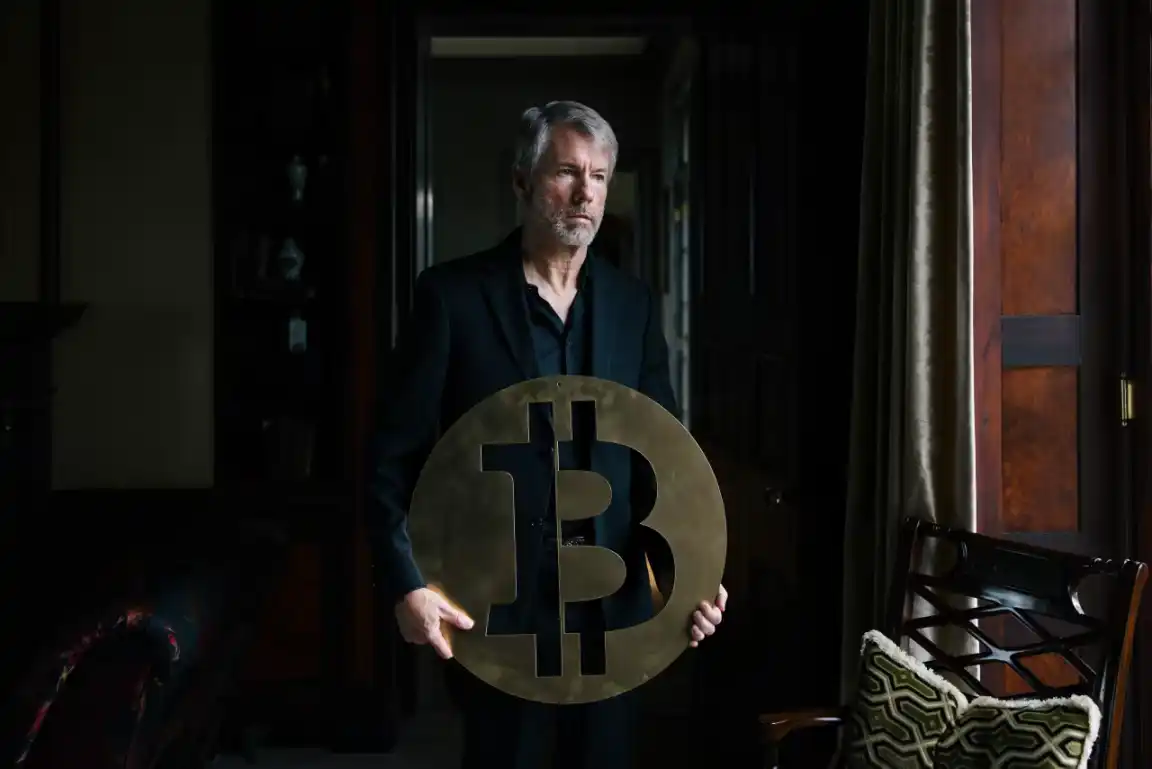
MicroStrategy CEO Michael Saylor
Michael Saylor's company has not launched any popular products or services. What he and MicroStrategy have done is to sell new shares and bonds at a historically rapid pace, then invest all the funds in Bitcoin, vowing to do so repeatedly.
Over the past year, MicroStrategy's stock price has risen by about 690%. The 59-year-old chairman holds about 10% of the company, worth around $9.7 billion, and personally holds about $1.9 billion worth of Bitcoin.
Saylor has become a public face of the recent Bitcoin frenzy, with nearly 4 million followers on X Platform (formerly Twitter). To celebrate Bitcoin breaking $100,000, Saylor hosted a New Year's Eve party at his waterfront mansion in Miami, inviting hundreds of cryptocurrency community members, with his luxury yacht moored nearby. At the party, six dancers dressed in gold costumes performed. Prominent figures from various fields and investment heavyweights gathered, including former Legg Mason fund manager Bill Miller, Fortress Investment Group Chairman Peter Briger, and Capital Group's key portfolio manager Mark Casey. The event was live-streamed on YouTube to tens of thousands of Bitcoin enthusiasts, with Saylor hosting the party in a black suit jacket and a Bitcoin-themed T-shirt.
The enthusiasm for Saylor's company is so high that it has led to a perplexing situation: MicroStrategy holds about $47 billion worth of Bitcoin, but its stock market value has reached $97 billion. It's as if investors were spending $2 to buy a $1 bill. Equally surprising is that experienced investors are among the largest buyers, including the well-established mutual fund company Capital Group, which held about 8% of MicroStrategy as of September 30, and Norway Bank Investment Management, managing $1.5 trillion in assets from the Norwegian Government Pension Fund, holding nearly 1% of MicroStrategy.
Fans say that this premium reflects their belief that Saylor will continue to profit from his Bitcoin bet. They believe that Bitcoin's limited total supply of 21 million coins will increase its value. SYZ Capital partner Richard Byworth holds MicroStrategy stock personally and states that Saylor, by issuing stock at a high price and selling bonds to the company at favorable terms, is able to create value for shareholders while expanding MicroStrategy's Bitcoin reserves.
"This premium is reasonable and will continue to exist," said Wall Street veteran Jordi Visser, who previously worked at Morgan Stanley and recently bought MicroStrategy stock. "No other company can do what he has done. They now own about 2% of the Bitcoin supply; who else can own more?"
However, Saylor's strategy also comes with significant risks. He has ridden the investment waves, sometimes losing billions of dollars of personal wealth in a single day when the wave peaks and crashes.
Saylor declined to comment for this article.
Saylor, who has never been married, will turn 60 next month. He has faced setbacks in his career and clashed with financial regulatory authorities. Last year, he agreed to pay $40 million to the District of Columbia to settle an income tax dispute. Previously, Washington officials claimed he was, in fact, a District resident, not a resident of Florida or Virginia as he had claimed, and therefore should pay taxes to the District.
Saylor's father was a career Air Force officer. Saylor studied Aeronautics and Astronautics at MIT and participated in the Air Force Reserve Officer Training Corps. A few years after graduation, in 1989, he co-founded MicroStrategy in Tyson's Corner, Virginia, with a college friend. It started as a data mining software company.
During the late 1990s Internet bubble, MicroStrategy rose rapidly. His stock was worth about $10 billion, enough for him to throw lavish parties for employees and others, as well as organize Caribbean cruises. MicroStrategy also bought domain names such as Mike.com, Michael.com, Hope.com, and Voice.com, selling Voice.com for $30 million.
But everything came crashing down when the Internet bubble burst in 2000. As regulators examined industry revenue recognition practices, MicroStrategy was forced to restate its revenue and earnings. The failure was so dramatic that it even caught the attention of tabloids: in March of that year, the New York Daily News ran a story titled "Loses $6 Billion in a Day" with a photo of the then 35-year-old Saylor, looking neat in a suit and tie but with a bewildered expression on his face.
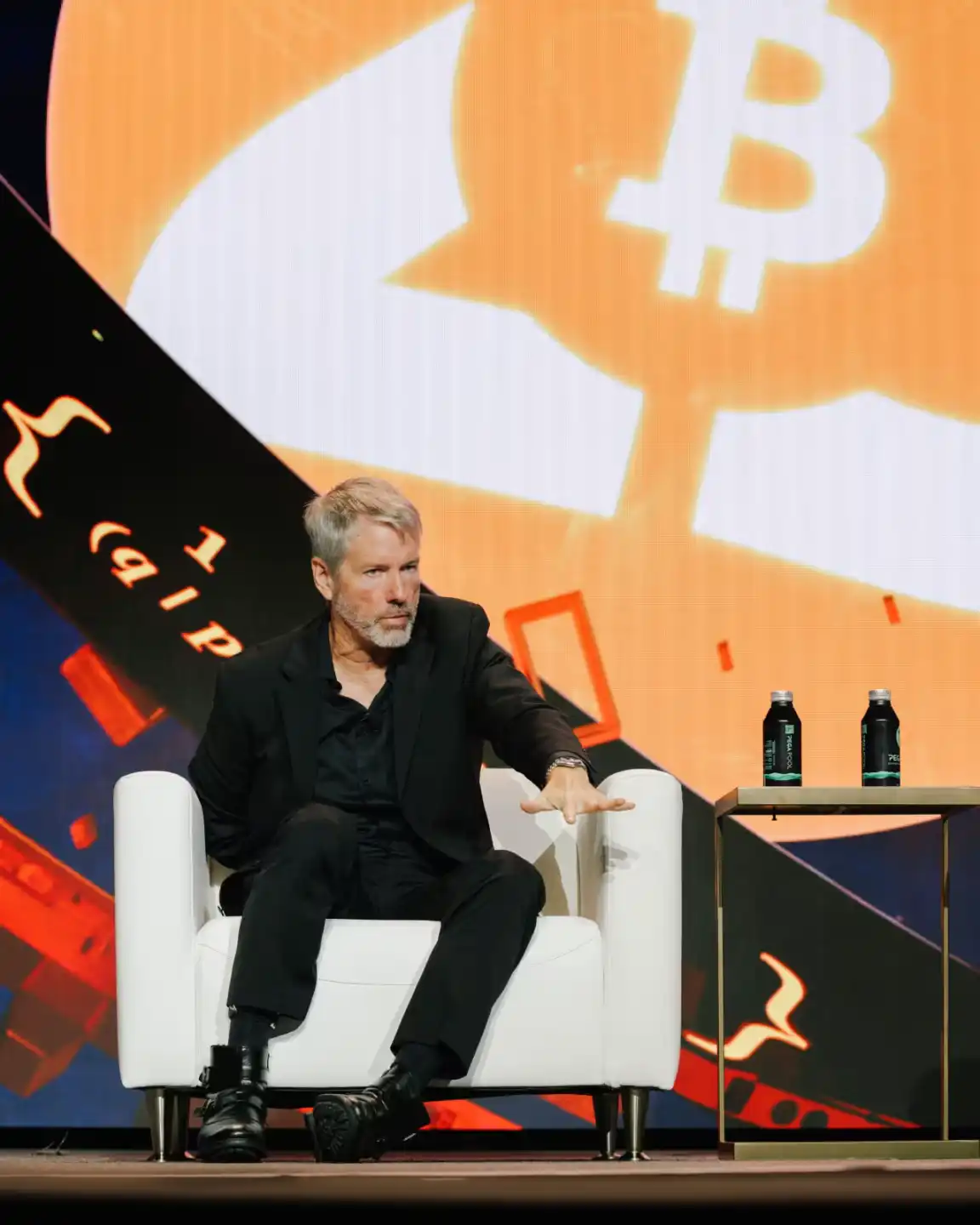
Saylor has always been a prominent figure in the Bitcoin space, and the above image shows him speaking at a conference in 2023
Later that year, Saylor, along with two other executives and the company, paid $11 million to settle accounting fraud charges brought by the U.S. Securities and Exchange Commission (SEC) over a financial restatement. The SEC alleged that the company had overstated its revenue and income, showing profits instead of losses, but Saylor and others neither admitted nor denied the allegations.
In July 2002, MicroStrategy's stock closed at 45 cents, a significant drop from its peak of $313 in 2000, and the company was facing debt issues.
During a lunch at a Hamptons villa in New York, venture capitalist Rick Rickertsen expressed sympathy to Saylor and asked him if he was worried about losing his company.
“It’s possible,” Saylor said, “but I would start over.”
Saylor restructured MicroStrategy's debt and implemented a 10-for-1 stock split to avert the crisis. Over the years, Saylor had been on the lookout for the next big opportunity. At one point, he made a significant personal gain by investing in stocks like Google and Apple, but he dismissed Bitcoin, once tweeting in 2013 that Bitcoin was “days numbered.”
By 2020, MicroStrategy's stock had remained almost unchanged for years with dim growth prospects. The company had a market capitalization of only $1.5 billion but was still profitable with around $500 million in cash.
During the COVID-19 pandemic in 2020, Saylor contemplated what to do with the company's cash from his home in Miami. Concerned that government spending to maintain economic stability might lead to inflation, Saylor revisited Bitcoin and became a staunch supporter. Soon, he proposed to the board to buy Bitcoin with the cash, a move the board agreed to mainly because the company seemed to have no better options. They believed that at least this move would attract some beneficial attention.
“The company was at a standstill at the time, with little to no Wall Street attention,” Rickertsen, who later became a board member, said. “The future looked bleak.”
That year, Saylor took half of the company's cash, about $250 million, and bought Bitcoin at a price of around $11,000 per coin. He himself also put in over $100 million. However, the Bitcoin price soon dropped to $9,000, resulting in a paper loss of about $40 million for MicroStrategy.
"Most of our board members were like, 'Oh my God, what have we done, we're going to get sued,'" Rickertsen said, "Saylor was also very worried."
This panic did not last long. The price of Bitcoin started to rise, breaking $26,000 by the end of 2020. MicroStrategy borrowed billions of dollars to buy more Bitcoin, including a $205 million loan at a floating interest rate of 8.27%, which was challenging loan terms at the time.
Then, by the end of 2022, the cryptocurrency exchange FTX collapsed, causing the Bitcoin price to drop below $17,000, and MicroStrategy's stock price also fell to around $17. The company's cost basis for the held Bitcoin was around $30,000, resulting in a paper loss. Rumors spread that the company was in trouble. However, Saylor and the company doubled down on their bet.
With Saylor doubling down on the strategy of raising funds through stock and bond offerings to purchase Bitcoin, and with the continued rise in the price of Bitcoin, the company's stock price began to soar. According to investment bank Benchmark Company analyst Mark Palmer, in just 2024, MicroStrategy raised $23.2 billion through stock and bond sales.
Saylor's rhetoric may be somewhat repetitive and simplistic, but his belief in Bitcoin has always been unwavering. He emphasizes that Bitcoin's supply is limited, a characteristic that sets it apart from the U.S. dollar and even gold. Saylor believes this makes Bitcoin perform better in resisting inflation. He also states that Bitcoin's digital nature makes it more convenient and cost-effective for holders to store and use, without the need for intermediaries, making it a "revolutionary" form of currency.
Some mutual funds and other institutions have internal rules prohibiting the purchase of Bitcoin and Bitcoin ETFs, making MicroStrategy's stock their indirect path to betting on Bitcoin. Even some large conservative investors view the stock as a potential way to gain an advantage over competitors who are unwilling to enter the cryptocurrency space.
Indeed, Saylor is adept at creating various types of equity and debt investment products, such as bank loans, convertible bonds, common stock, etc., to ensure a continuous influx of funds.
“His genius is in creating different products for different audiences,” said Brett Messing, a partner at SkyBridge Capital, a firm that manages funds with significant Bitcoin investments and provides advisory services to a fund holding MicroStrategy stock.
Over the past month or so, Saylor has been aggressively promoting MicroStrategy and Bitcoin on TV shows, popular podcasts, industry conferences, and other venues. “If you’re not buying Bitcoin at the highs, you’re missing out on an opportunity to make money,” he recently tweeted.
“He’s bombastic in public and detailed in private,” said Matt Hougan, Chief Investment Officer at Bitwise Asset Management, recounting how last summer, he heard Saylor speak at a dinner with 12 investors. His firm manages an ETF holding MicroStrategy stock.
If Bitcoin continues to rise, the premium on holding MicroStrategy stock may persist. However, if Bitcoin prices crash, MicroStrategy’s stock may follow suit. Even if the premium disappears, the stock could still be affected as long as Bitcoin prices remain stable. Skeptics point out that similar investment vehicles, such as closed-end funds, often trade below the value of their underlying assets, not at a premium.
Nevertheless, the company may not be facing a going-concern issue. MicroStrategy currently has $7.26 billion in unsecured debt, most of which is issued at very low rates. The company holds 450,000 Bitcoins at an average cost of around $62,000 per coin. The value of the Bitcoins held by the company would only fall below its debt if Bitcoin dropped below $16,000 and stayed around that level at debt maturity.
Just over a week ago, Saylor unveiled a novel way for MicroStrategy to raise funds from investors to support its Bitcoin purchase plans. He announced that the company would issue $2 billion in “perpetual preferred stock” this quarter. The news prompted analyst Palmer to reiterate his $650 price target for MicroStrategy stock, about 65% above the current price.
You may also like

WEEX Labs Lands at Dutch Blockchain Week: A Disruptive Crypto × AI Conversation Sets Sail in Amsterdam

SK Hynix Reportedly Plans U.S. ADR Listing as Early as August, With SEC Approval Possible in Late June
SK Hynix may pursue a U.S. ADR listing as early as August, with SEC approval reportedly possible in late June amid strong AI chip supply chain demand.

SpaceX vs Tesla vs xAI: Which Elon Musk Trade Has the Biggest Upside in 2026?

OpenAI Reveals It Has Confidentially Submitted an S-1 to the SEC, Keeping the Door Open for a Future IPO
On June 9, according to an OpenAI announcement, the company recently confidentially submitted a draft S-1 registration statement to the U.S. Securities and Exchange Commission (SEC), beginning the preliminary compliance process for a potential initial public offering. OpenAI said it chose to disclose this proactively because it expected the news might leak; however, the company has not yet set a specific listing timeline, and related arrangements may still take some time.

Latest research from 13 top universities including Cornell University: The current state, challenges, and misconceptions of the fusion of Crypto and AI
Deconstructing Anthropic: The Best AI Company, Possibly Also a Type of Organizational Invention
Apollo and Blackstone Reportedly Back $35 Billion Anthropic Chip Financing as Deal Details Remain Unclear
On June 9, according to currently available news alerts, Apollo and Blackstone Group participated in a $35 billion financing for an Anthropic “chip project.” Based on the original wording of the report, the funding has already been raised, but public information remains limited. The financing structure, use of proceeds, project entity, and whether Apollo and Blackstone participated through equity, debt, or project financing have not yet been disclosed.

Humanity Protocol Security Incident Escalates: More Than $31 Million Stolen From Related Addresses as Attacker Continues Selling H for ETH
On June 9, according to monitoring by Onchain Lens, more than $31 million has been stolen from addresses linked to Humanity Protocol, and the attack is still ongoing, with the hacker continuously swapping H tokens for ETH. Project founder Terence Kwok later confirmed the security incident on X, saying the issue involved a private key leak.

Bloomberg: As Bitcoin Weakens, Stablecoins and RWA Continue to Drive Expansion in Crypto Businesses
In June, Bloomberg reported that despite Bitcoin falling below $60,000 last week, wiping out about $235 billion in market value within seven days, and dropping close to 50% from last year’s peak, some core businesses in the crypto industry are still expanding, mainly in stablecoins, real-world asset tokenization (RWA), payments, and infrastructure. The report also noted that overall altcoin activity has contracted significantly: altcoin market capitalization has fallen from a peak of about $431 billion in November 2021 to around $170 billion, and among the tens of millions of tokens issued in recent years, fewer than 1,700 still maintain meaningful trading activity.

Galaxy Deep Research Report: How Hyperliquid's HIP-4 Upgrade Changes the Landscape of Prediction Markets?
Binance Research: RWA Market Expected to Expand Nearly 6x from Early 2025, with Public Equities and Onchain Payments Heating Up Together
In June, Binance Research said in its monthly market report that the real-world asset (RWA) market is expected to grow by about 589% from the beginning of 2025. Bond- and money market fund-related RWA expanded by about $6.5 billion, up 83% year over year, while publicly traded equity RWAs grew by about 422%. The report also noted that monthly crypto debit card transaction volume exceeded $747 million in May, up 48.6% year to date.

Japan to Assess a Framework for Yen Stablecoins and Crypto ETFs as Asia’s Compliant Payments Narrative Heats Up
Recently, according to the original report, Japan is considering the launch of yen stablecoins and cryptocurrency ETFs. Public information remains limited at this stage, and there is still no complete policy text, regulatory draft, or clear implementation timeline, so this is better characterized as a “policy discussion” rather than formal implementation. The original wording also noted that advancing stablecoin regulation in Asia is driving XRP usage and supporting growth in the XRPL ecosystem. However, based on currently available public information, there is not enough evidence to directly establish a clear causal relationship between this round of discussion in Japan and XRP or XRPL.

ZachXBT: Humanity private key leak and abnormal surge in H token should be viewed separately
On June 9, according to related disclosures, on-chain investigator ZachXBT posted an update on Humanity’s roughly $31 million security incident, saying that after further analyzing fund flows, he currently tends to believe the project team was not involved in an “inside job” or a self-staged attack. According to him, the official explanation about the private key leak was broadly accurate, but before the token unlock, the price of H had been artificially pushed higher, and the hacker later took advantage of that market environment; therefore, the private key leak and the earlier abnormal price pumping should be regarded as two separate and independent events. This reframing has shifted the market’s understanding of the nature of the incident. Earlier discussion around Humanity had focused on whether the team directly participated in the attack or used the security incident to cover up internal operations. ZachXBT’s latest remarks shift the focus from “whether it was self-theft” to “whether there were pre-unlock market structure issues.” He also questioned whether the team may have.

Morning Report | OpenAI has submitted an S-1 registration statement draft to the U.S. SEC; Morpho completes $175 million financing

Morning Report | BitMine increased its holdings by 126,971 ETH last week; trader Eugene announced his exit from the crypto market

Wang Chuan: How can one not feel anxious after the neighbor Old Wang made thirty times profit by investing in storage stocks? (Seven) - A quarter-century cycle
Cryptocurrency CEXs are flocking to sell US stocks, and traditional brokerages are facing an "uninvited guest."
$75 billion in foreign capital has fled, and South Korean retail investors have absorbed it all using leverage
WEEX Labs Lands at Dutch Blockchain Week: A Disruptive Crypto × AI Conversation Sets Sail in Amsterdam
SK Hynix Reportedly Plans U.S. ADR Listing as Early as August, With SEC Approval Possible in Late June
SK Hynix may pursue a U.S. ADR listing as early as August, with SEC approval reportedly possible in late June amid strong AI chip supply chain demand.
SpaceX vs Tesla vs xAI: Which Elon Musk Trade Has the Biggest Upside in 2026?
OpenAI Reveals It Has Confidentially Submitted an S-1 to the SEC, Keeping the Door Open for a Future IPO
On June 9, according to an OpenAI announcement, the company recently confidentially submitted a draft S-1 registration statement to the U.S. Securities and Exchange Commission (SEC), beginning the preliminary compliance process for a potential initial public offering. OpenAI said it chose to disclose this proactively because it expected the news might leak; however, the company has not yet set a specific listing timeline, and related arrangements may still take some time.
Latest research from 13 top universities including Cornell University: The current state, challenges, and misconceptions of the fusion of Crypto and AI
Deconstructing Anthropic: The Best AI Company, Possibly Also a Type of Organizational Invention


